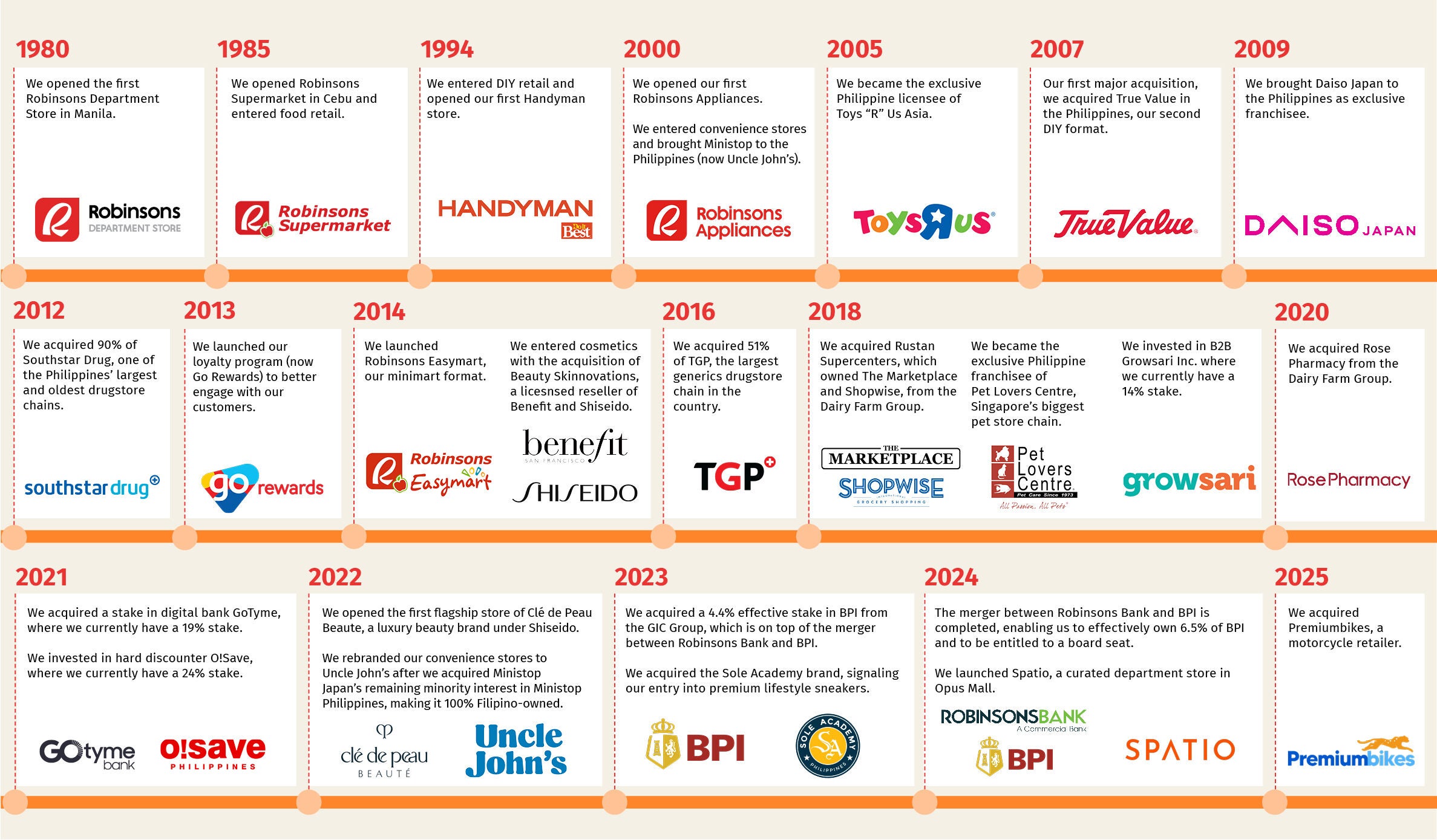




Robinsons Retail Holdings, Inc. is one of the Philippines’ largest multiformat retailers. Founded in 1980 by the entrepreneur John L. Gokongwei, Jr. with the opening of the first Robinsons Department Store, we now have a robust network of over 2,700 stores alongside over 2,100 franchised community drugstores under TGP.
After 45 years of continued service, we have created a dynamic
portfolio of banners tailored to the needs of the Filipino
shopper—from supermarkets and convenience stores to drugstores,
department stores, DIY stores, and specialty stores covering
appliances, toys, mass merchandise, beauty, pet retail,
lifestyle sneakers, and motorcycles. Our commitment to expansion
remains unwavering. By extending modern retail to underserved
markets, we embrace a holistic business ethos prioritizing
sustainability amid economic shifts. Central to our strategy is
a culture deeply rooted in customer-centricity, ensuring our
products and services resonate responsively with shoppers.
Embracing omnichannel retail, we capitalize on synergistic
alliances as anchor tenants of premier mall developers like
Robinsons Malls while at the same time advancing our digital
presence. This dual thrust fortifies our physical footprint
while accelerating the digital transition, aligning with
evolving consumer preferences.
At Robinsons Retail, we cultivate meaningful relationships with
our people, stakeholders, and the communities we serve as we
champion a commitment to fostering long-term growth and
sustainability.
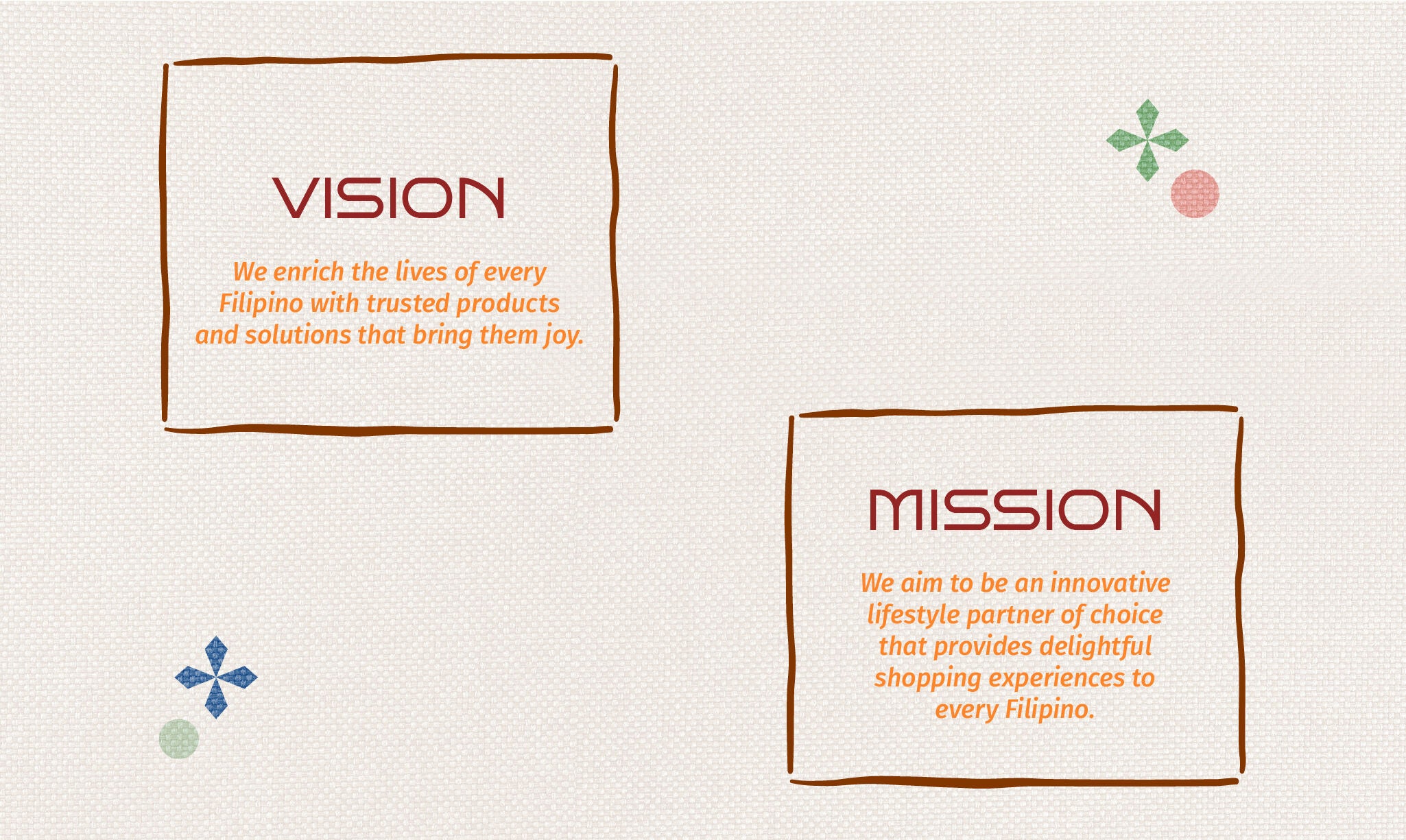
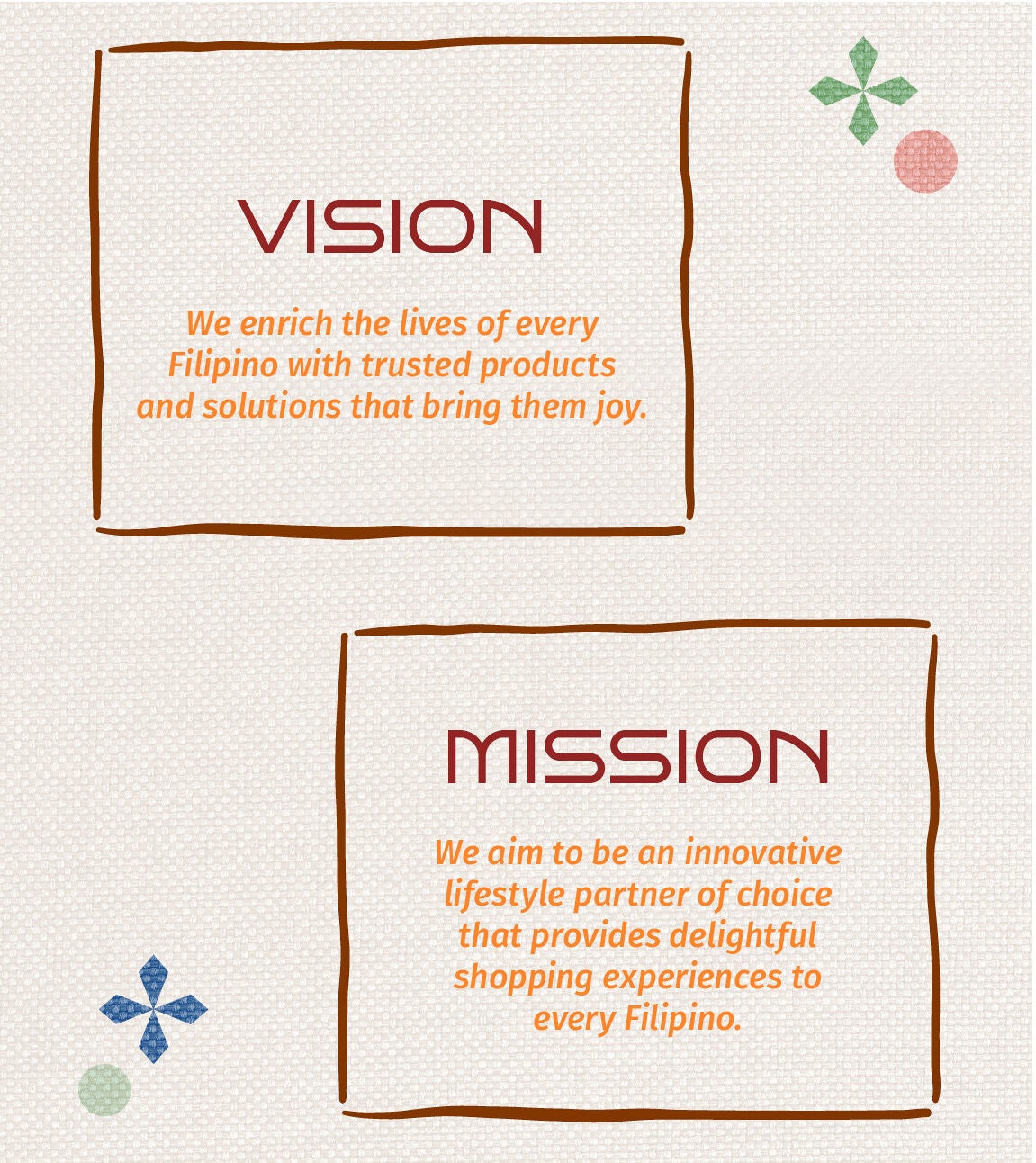
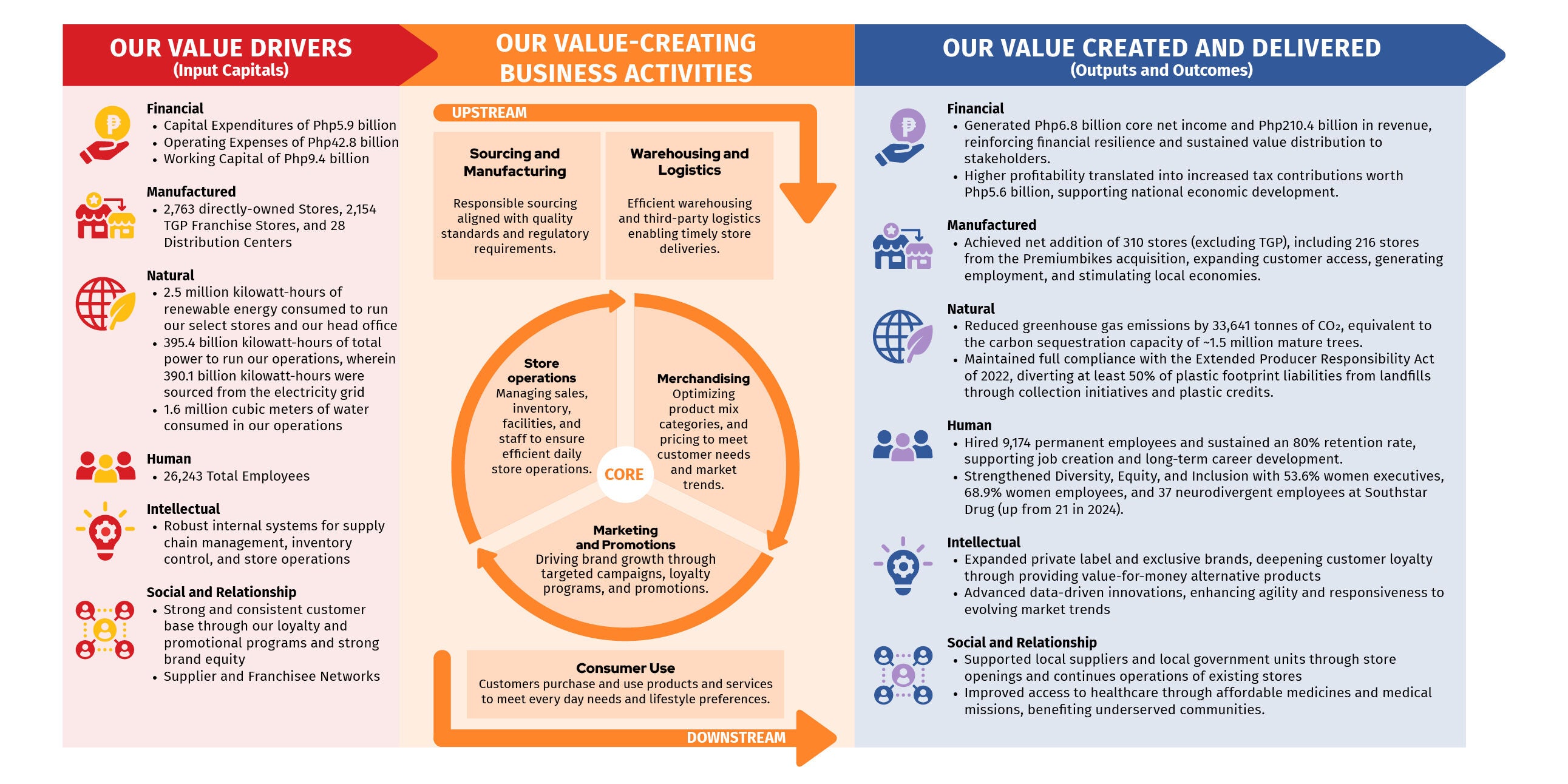
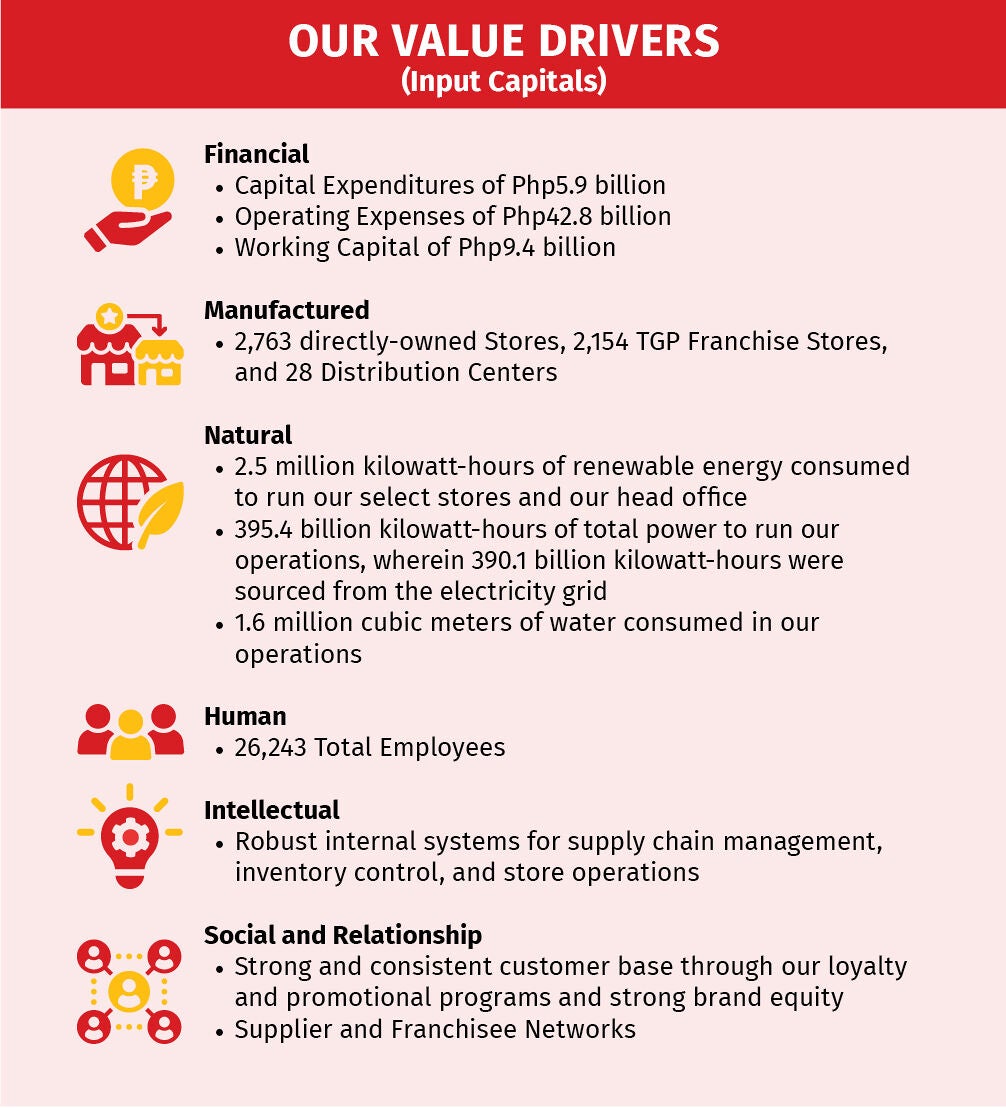
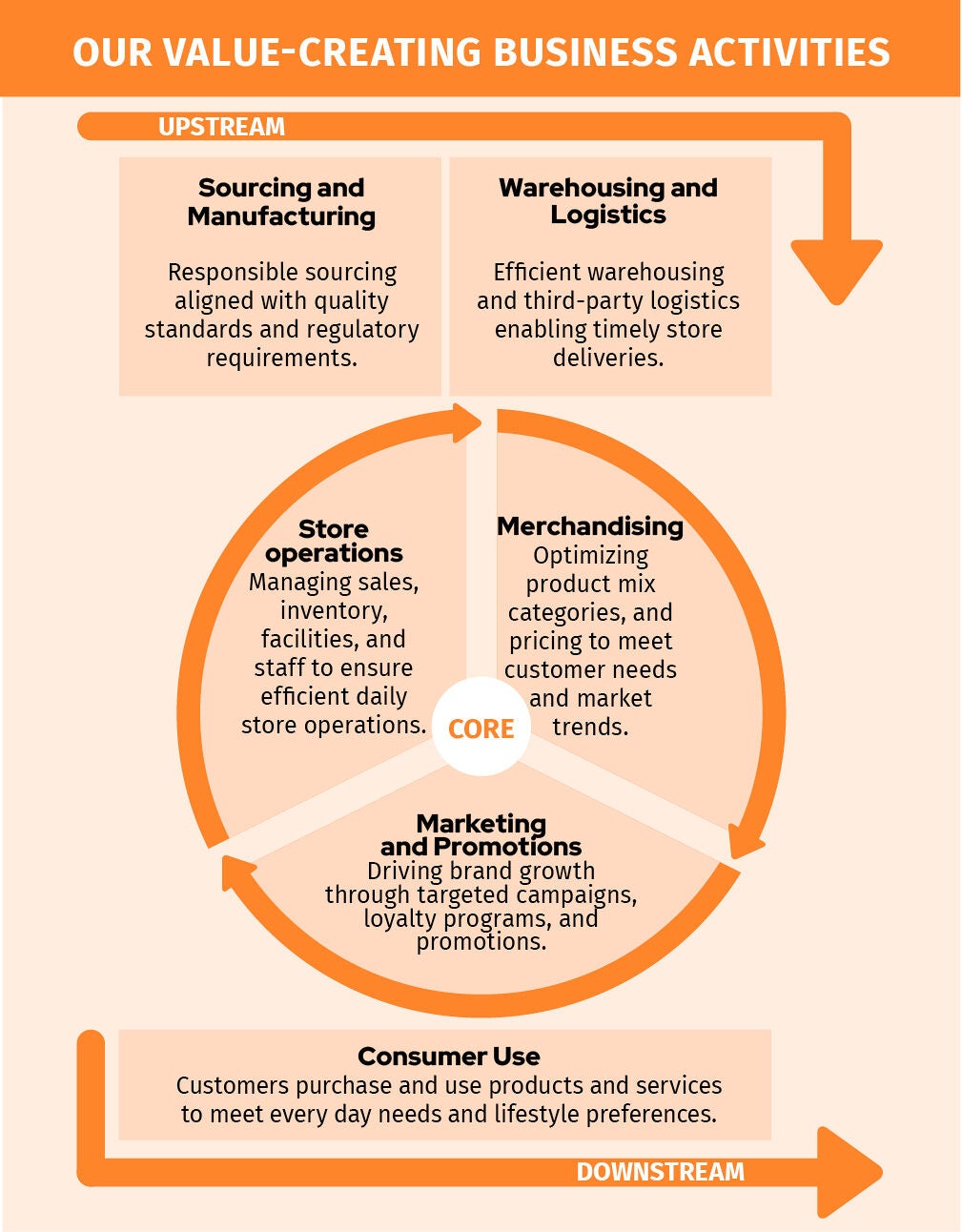
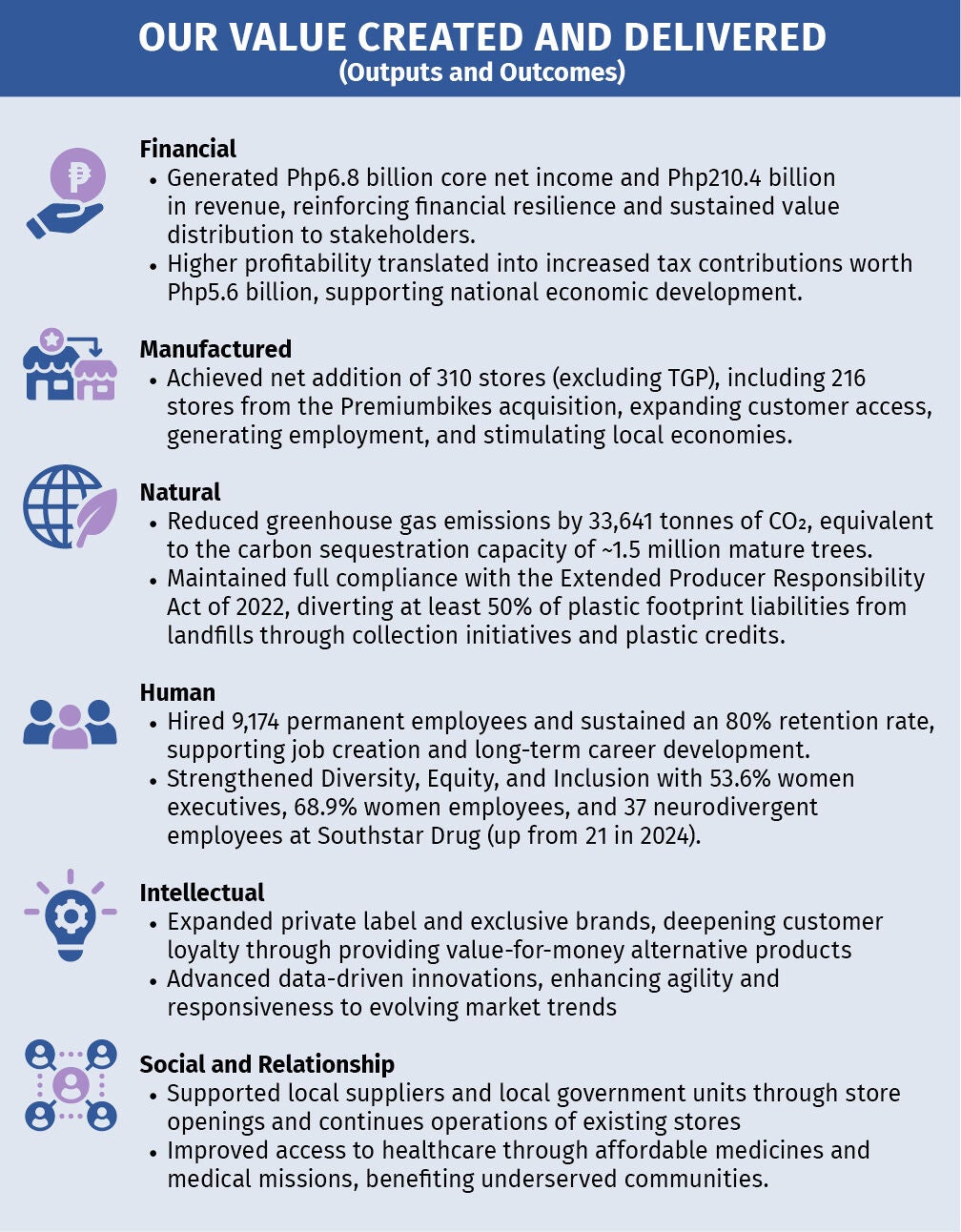
Robinsons Retail creates value by converting the strengths of its multi-format retail platform into meaningful outcomes for its stakeholders. Drawing on its financial, manufactured, natural, human, intellectual, and social and relationship capitals, the Company creates value through disciplined sourcing and logistics, effective store operations, relevant merchandising, and targeted marketing and promotions, all in service of everyday customer needs. This integrated model supports growth, strengthens resilience, and enables Robinsons Retail to deliver sustained value to customers, employees, suppliers, communities, and shareholders.
OUTLOOK
The Philippine retail sector remains on a structural uptrend
despite near-term pressure on consumer sentiment. A young and
growing population, rising urbanization, and an expanding
middle-income segment underpin long-term consumption. These
are further supported by resilient remittance inflows and a
healthy labor market.
Industry dynamics also remain favorable, with modern trade
penetration in the Philippines still relatively low compared
to regional peers. In response, industry participants – both
new entrants and incumbents – have continued to invest in
growth initiatives to capture market share in a growing
sector.
However, ongoing geopolitical tensions and their corresponding
knock-on effects on consumer prices and supply chains pose
near-term risks for the sector. If prolonged, these pressures
may weigh on household spending and result in a more
challenging operating environment for retailers.
Nonetheless, the domestic retail market is well-positioned to
sustain its growth trajectory over the long-term, supported by
the structural tailwinds noted above and a gradual improvement
in consumer demand as price pressures eventually ease.
Strategy
Given the dynamic retail industry, Robinsons Retail continues
to adapt its strategy to create sustainable value for all
stakeholders.
Our growth pillars include refining our value proposition
across formats, aligning with evolving consumer preferences,
and differentiating in a highly competitive market. In
particular, the Company aims to strategically expand its store
network in underserved markets and optimize category mix to
drive foot traffic and basket size.
For 2026, the Company intends to expand its network by
approximately 130 to 170 new stores, with a particular focus
on the food and drugstore formats. Robinsons Retail also aims
to sustain same store sales growth (SSSG) of 2% to 4% through
improvements in basket size. The Company likewise aims to
improve gross margins by up to 20 basis points to 24.8%
through scale, category mix optimization, and private label
growth.
We are also implementing cost controls to strengthen
operational resilience, resulting in more targeted and
disciplined spending across the organization. At the same
time, investments continue in several priority areas,
including supply chain capabilities, digital infrastructure,
customer engagement programs, and people development. The
Company likewise intends to maintain disciplined cash flow
management across both operating expenses and capital
expenditures, supported by a budgeted
capital expenditure program of Php5 billion
to Php7 billion for the year.
We remain cognizant, however, of potential downside risks to
our plans and guidance should geopolitical tensions and
broader macroeconomic uncertainties persist, which may impact
operating expenses and consumer spending. In response, the
Company continues to strengthen its efficiency programs,
including energy optimization initiatives and disciplined
capital allocation focused on investments with clear strategic
and financial returns. We will also continue to differentiate
our banners through relevant assortments and compelling value
offerings.
Overall, these strategies are designed to strengthen our
competitive position, drive long-term profitability, and
ensure consistent value creation. RRHI’s strategic
priorities—anchored on expansion, customer-centric
enhancements, operational discipline, and continued
investments in strategic capabilities—provide a solid
foundation for long-term value creation and resilience in an
evolving retail environment.
Ongoing global sustainability developments, together with active
oversight by the Board and senior management and sustained
engagement with key stakeholders, continue to shape the
evolution of the Company’s sustainability framework. These
inputs have informed a refined approach that connects
sustainability priorities more closely with business strategy,
operational resilience, and long-term value creation.
The Company’s sustainability framework draws from recognized
international standards, including the IFRS Sustainability
Disclosure Standards (IFRS S1 and S2), the Sustainability
Accounting Standards Board (SASB) Standards, and the Global
Reporting Initiative (GRI). These frameworks provide
complementary perspectives that support consistent,
decision‑useful disclosures and enhance comparability of
sustainability information. Having applied GRI Standards since
2018, the Company remains committed to advancing transparent and
credible sustainability reporting while preparing for future
alignment with IFRS-based disclosures.
Our material topics were reaffirmed in 2025, reflecting their
continued relevance to both stakeholder expectations and the
evolving business context. These topics capture sustainability
matters that are integral to how the Company manages its
impacts, navigates external developments, and responds to
emerging risks and opportunities across its value chain.
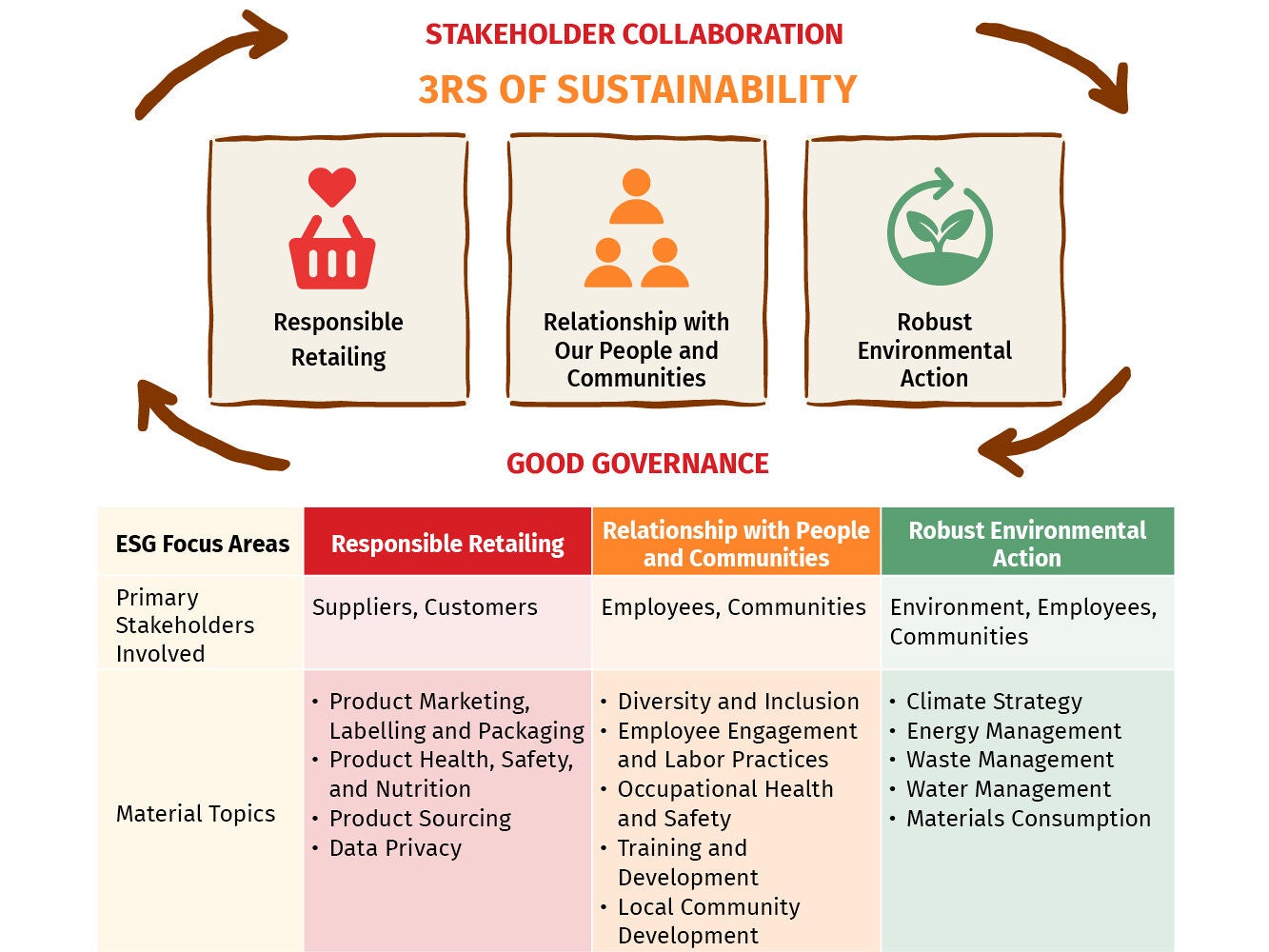
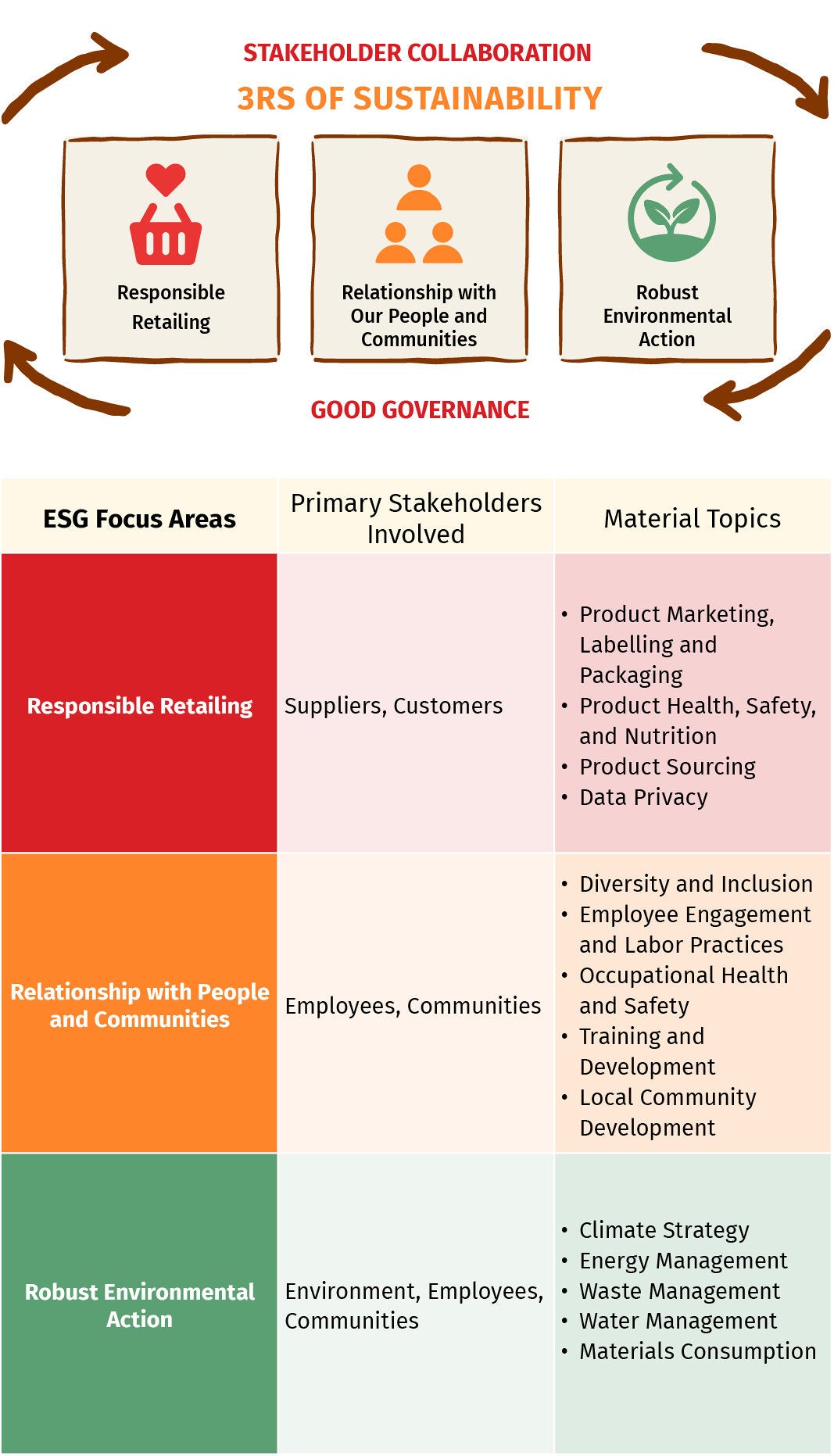
The Company’s 14 material topics are structured under the 3Rs of
Sustainability, our ESG strategic focus areas: Responsible
Retailing, Relationship with Our People and Communities, and
Robust Environmental Action.
Anchored on Good Governance and enabled through Stakeholder
Collaboration, the 3Rs articulate our commitment to responsible
business conduct, meaningful stakeholder engagement, and
disciplined environmental stewardship. Together, they support
our purpose of delivering trusted products and solutions that
create lasting value for our stakeholders.
Building on the revised sustainability framework launched in
2023, the Company will undergo a deeper performance assessment
through data analysis and benchmarking. This ongoing work
strengthens the basis for setting medium-term sustainability
targets and enhances our readiness for more comprehensive
sustainability disclosures in the coming years, including the
full adoption of IFRS S1 and S2.
Stakeholder Engagement
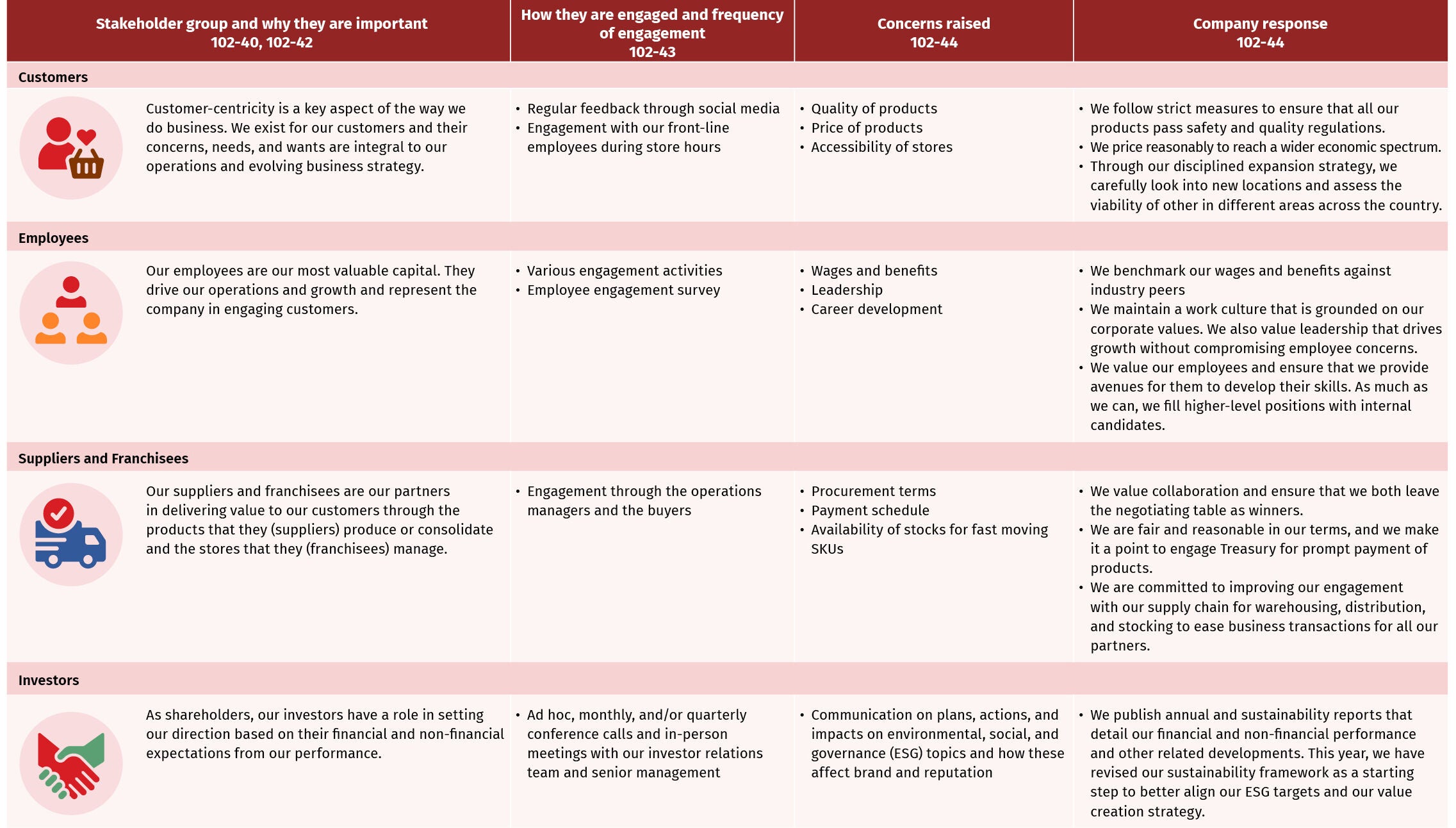
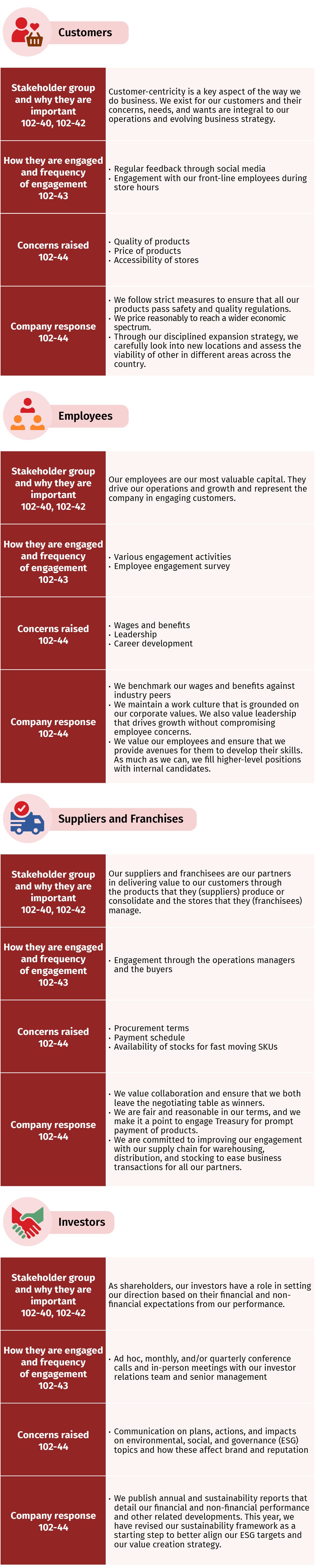
We recognize the importance of engaging with our stakeholders in developing a sustainable and growth-oriented strategy. By promoting dialogue with our key stakeholder groups, which we have identified as our customers, employees, suppliers and franchisees, and investors, we are able to gain valuable insights into their concerns and needs, which in turn help inform our decision-making to remain agile and responsive to changing needs and expectations.
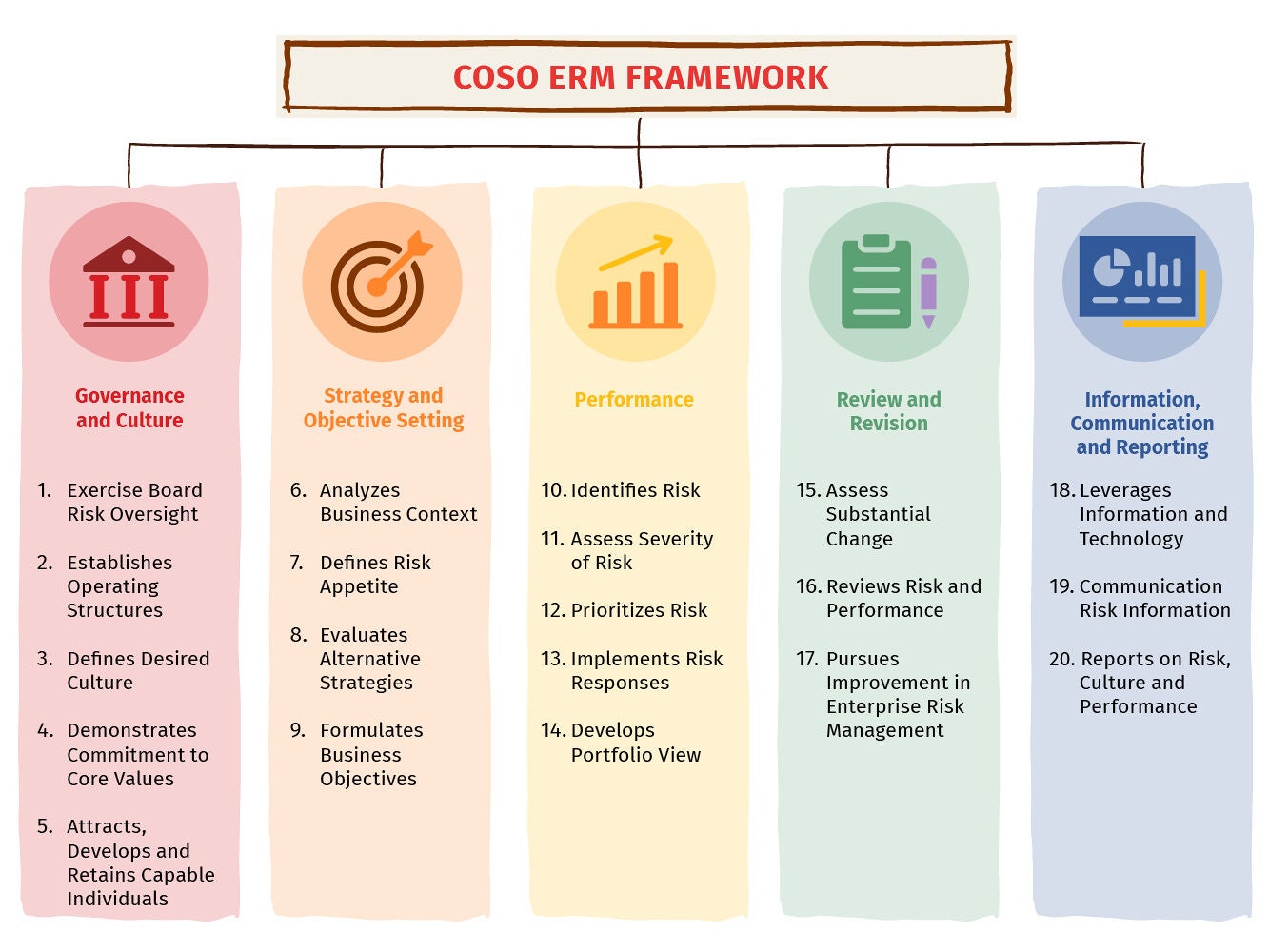
Enterprise Risk Management (ERM) Framework
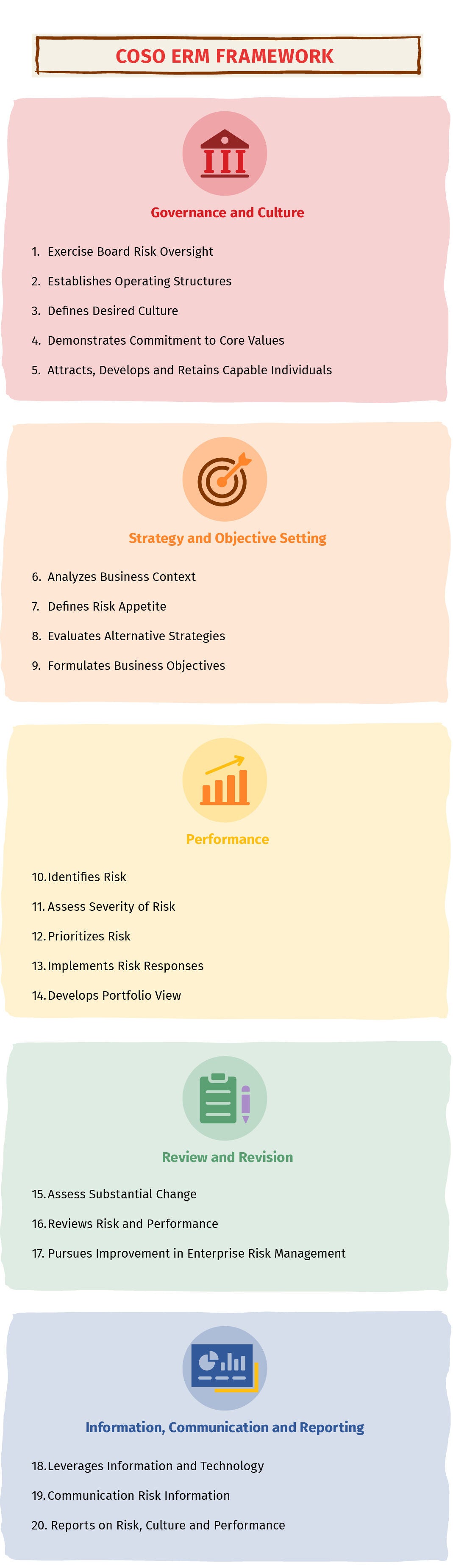
At Robinsons Retail, we take a proactive and comprehensive approach to managing our risks. We have adopted the Committee of Sponsoring Organizations (COSO) 2017 ERM Framework to ensure consistent risk management across all facets of our operations.
Risk Classifications
Identifying and defining risks is a critical component for effective ERM. We have identified seven (7) primary risks that have the greatest potential to impact Robinsons Retail. By understanding these risks, we are able to inform decision-making and strategy on how to minimize potential impact.
1. Strategic risk
Risks that potentially impact our short, medium, and long- term goals; business models and adaptive pivots in response to emerging trends in the retail industry.
2. Financial risk
Risks that are associated with our performance across its key financial metrics, with emphasis on the net income.
3. Operational risk
Risks that are present in the daily conduct of business, such as physical risks to stores and distribution centers, as well as disruptions in the supply chain.
4. Reputational risk
Risks that affect stakeholder perspective on Robinsons Retail and its subsidiaries.
5. People risk
Risks associated with labor management and employee satisfaction.
6. Legal and Governance risk
Risks associated with compliance to pertinent laws and regulations, policy requirements, and relations with the government.
7. Digital risk
Risks within Robinsons Retail’s thrusts of incorporating relevant technologies in various aspects of business operations.
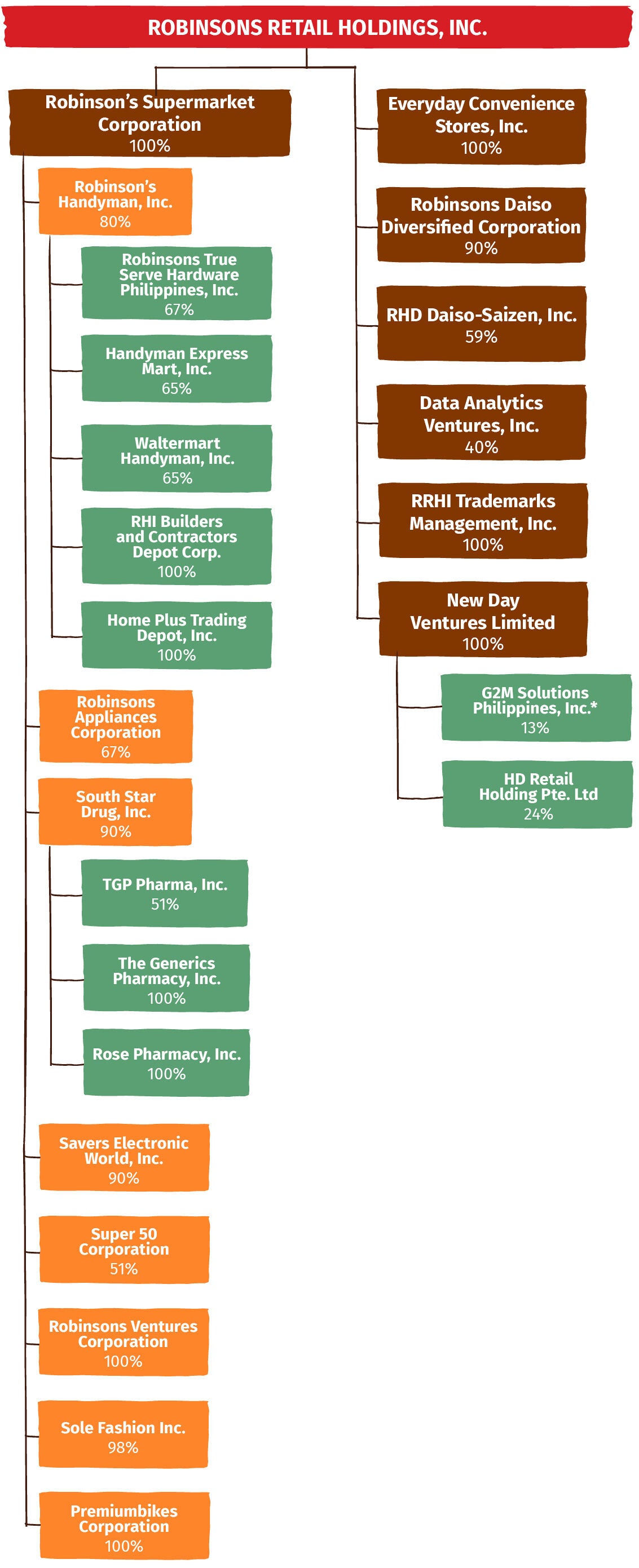
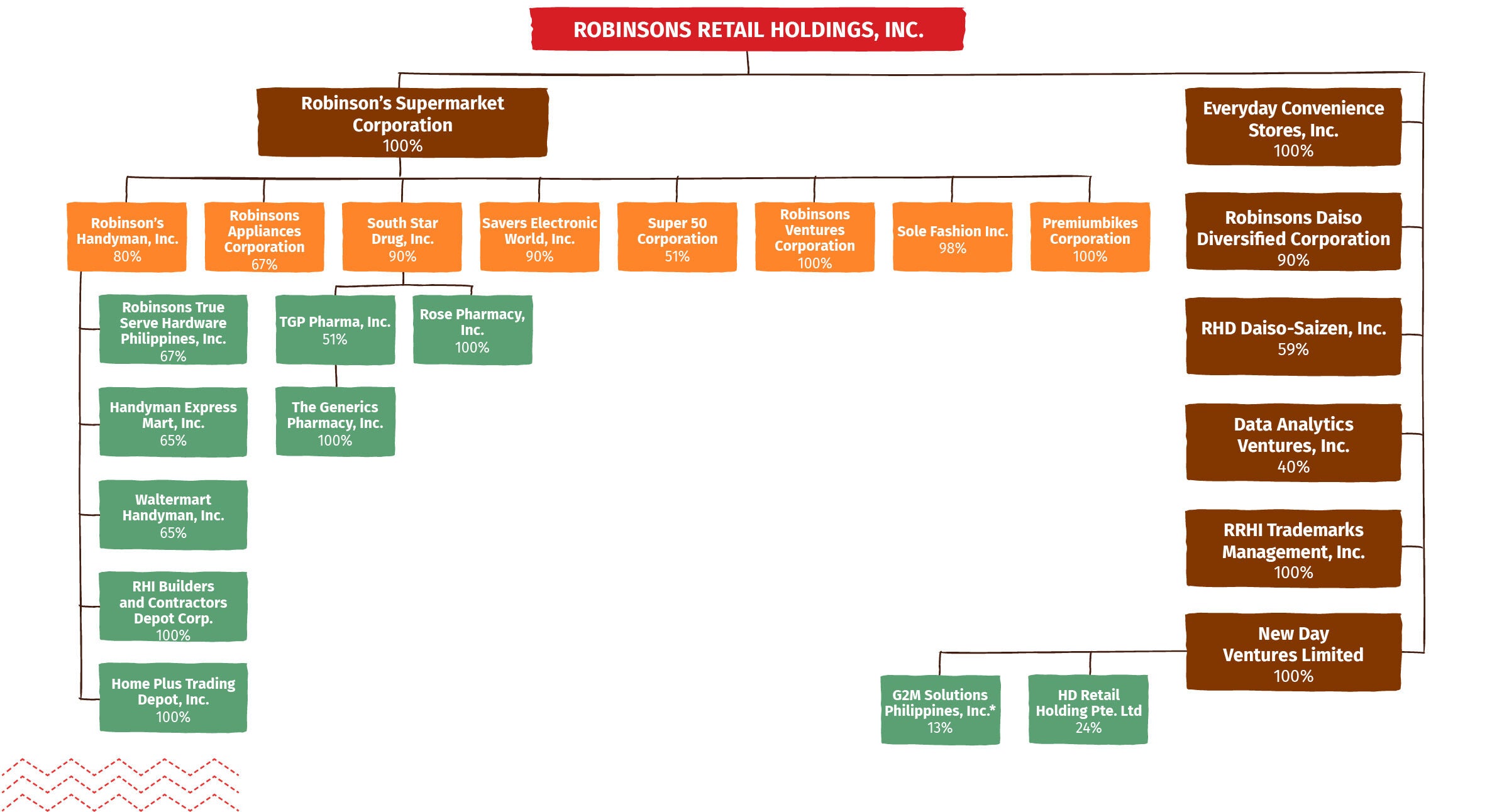
*Represents notes with conversion rights